MongoDB Series - ReplicaSet Cluster Deployment

Environment Introduction⌗
- Multipass VMs
- mongo:latest
For an introduction to Multipass, you can check my other article “Cross-platform Ubuntu VMs Management Tool”.
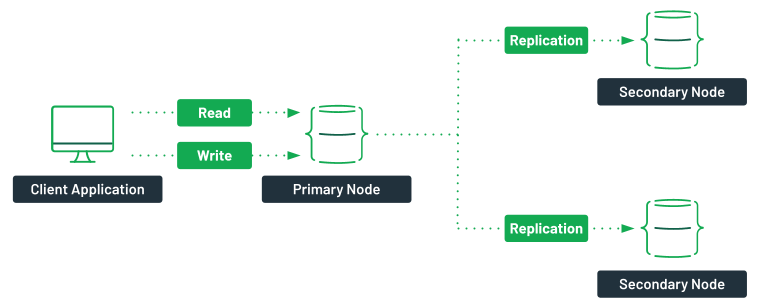
Installing Nodes⌗
multipass launch docker --name cluster-01 --disk 40G --cpus 2 --mem 4G
multipass launch docker --name cluster-02 --disk 40G --cpus 2 --mem 4G
multipass launch docker --name cluster-03 --disk 40G --cpus 2 --mem 4G
Name                    State             IPv4             Image
cluster-01              Running           10.0.8.4         Ubuntu 22.04 LTS
                                          172.17.0.1
cluster-02              Running           10.0.8.5         Ubuntu 22.04 LTS
                                          172.17.0.1
cluster-03              Running           10.0.8.6         Ubuntu 22.04 LTS
                                          172.17.0.1
As we can see, after the virtual machines are deployed, their IPs are 10.0.8.4, 10.0.8.5, and 10.0.8.6 respectively.
Getting the Latest MongoDB Image⌗
Pull the latest Docker image of MongoDB on each node:
docker pull mongo:latest
Starting MongoDB Nodes⌗
multipass shell cluster-01
docker run -d --name mongodb --net host mongo:latest mongod --replSet betterde --bind_ip 10.0.8.4

multipass shell cluster-02
docker run -d --name mongodb --net host mongo:latest mongod --replSet betterde --bind_ip 10.0.8.5

multipass shell cluster-03
docker run -d --name mongodb --net host mongo:latest mongod --replSet betterde --bind_ip 10.0.8.6
–replSet specifies the name of the ReplicaSet, and starts the corresponding mongod service on each of the three VMs.
Initializing the ReplicaSet⌗
# Login to the VM node
multipass shell cluster-01

# Enter the MongoDB container
docker exec -it mongodb bash

# Connect to the MongoDB database using mongosh
mongosh

# Initialize the ReplicaSet
rs.initiate()

# Add nodes
rs.add("10.0.8.5:27017")
rs.add("10.0.8.6:27017")
If everything goes well, the cluster setup is complete. We can use the following command to check the cluster status:
rs.status();
{
  set: 'betterde',
  date: ISODate("2022-10-17T10:21:08.985Z"),
  myState: 1,
  term: Long("1"),
  syncSourceHost: '',
  syncSourceId: -1,
  heartbeatIntervalMillis: Long("2000"),
  majorityVoteCount: 2,
  writeMajorityCount: 2,
  votingMembersCount: 3,
  writableVotingMembersCount: 3,
  optimes: {
    lastCommittedOpTime: { ts: Timestamp({ t: 1666002061, i: 1 }), t: Long("1") },
    lastCommittedWallTime: ISODate("2022-10-17T10:21:01.056Z"),
    readConcernMajorityOpTime: { ts: Timestamp({ t: 1666002061, i: 1 }), t: Long("1") },
    appliedOpTime: { ts: Timestamp({ t: 1666002061, i: 1 }), t: Long("1") },
    durableOpTime: { ts: Timestamp({ t: 1666002061, i: 1 }), t: Long("1") },
    lastAppliedWallTime: ISODate("2022-10-17T10:21:01.056Z"),
    lastDurableWallTime: ISODate("2022-10-17T10:21:01.056Z")
  },
  lastStableRecoveryTimestamp: Timestamp({ t: 1666002061, i: 1 }),
  electionCandidateMetrics: {
    lastElectionReason: 'electionTimeout',
    lastElectionDate: ISODate("2022-10-17T09:47:06.626Z"),
    electionTerm: Long("1"),
    lastCommittedOpTimeAtElection: { ts: Timestamp({ t: 1666000026, i: 1 }), t: Long("-1") },
    lastSeenOpTimeAtElection: { ts: Timestamp({ t: 1666000026, i: 1 }), t: Long("-1") },
    numVotesNeeded: 1,
    priorityAtElection: 1,
    electionTimeoutMillis: Long("10000"),
    newTermStartDate: ISODate("2022-10-17T09:47:06.643Z"),
    wMajorityWriteAvailabilityDate: ISODate("2022-10-17T09:47:06.655Z")
  },
  members: [
    {
      _id: 0,
      name: '10.0.8.4:27017',
      health: 1,
      state: 1,
      stateStr: 'PRIMARY',
      uptime: 2200,
      optime: { ts: Timestamp({ t: 1666002061, i: 1 }), t: Long("1") },
      optimeDate: ISODate("2022-10-17T10:21:01.000Z"),
      lastAppliedWallTime: ISODate("2022-10-17T10:21:01.056Z"),
      lastDurableWallTime: ISODate("2022-10-17T10:21:01.056Z"),
      syncSourceHost: '',
      syncSourceId: -1,
      infoMessage: '',
      electionTime: Timestamp({ t: 1666000026, i: 2 }),
      electionDate: ISODate("2022-10-17T09:47:06.000Z"),
      configVersion: 6,
      configTerm: 1,
      self: true,
      lastHeartbeatMessage: ''
    },
    {
      _id: 1,
      name: '10.0.8.5:27017',
      health: 1,
      state: 2,
      stateStr: 'SECONDARY',
      uptime: 2006,
      optime: { ts: Timestamp({ t: 1666002061, i: 1 }), t: Long("1") },
      optimeDurable: { ts: Timestamp({ t: 1666002061, i: 1 }), t: Long("1") },
      optimeDate: ISODate("2022-10-17T10:21:01.000Z"),
      optimeDurableDate: ISODate("2022-10-17T10:21:01.000Z"),
      lastAppliedWallTime: ISODate("2022-10-17T10:21:01.056Z"),
      lastDurableWallTime: ISODate("2022-10-17T10:21:01.056Z"),
      lastHeartbeat: ISODate("2022-10-17T10:21:08.915Z"),
      lastHeartbeatRecv: ISODate("2022-10-17T10:21:08.916Z"),
      pingMs: Long("2"),
      lastHeartbeatMessage: '',
      syncSourceHost: '10.0.8.4:27017',
      syncSourceId: 0,
      infoMessage: '',
      configVersion: 6,
      configTerm: 1
    },
    {
      _id: 2,
      name: '10.0.8.6:27017',
      health: 1,
      state: 2,
      stateStr: 'SECONDARY',
      uptime: 2001,
      optime: { ts: Timestamp({ t: 1666002061, i: 1 }), t: Long("1") },
      optimeDurable: { ts: Timestamp({ t: 1666002061, i: 1 }), t: Long("1") },
      optimeDate: ISODate("2022-10-17T10:21:01.000Z"),
      optimeDurableDate: ISODate("2022-10-17T10:21:01.000Z"),
      lastAppliedWallTime: ISODate("2022-10-17T10:21:01.056Z"),
      lastDurableWallTime: ISODate("2022-10-17T10:21:01.056Z"),
      lastHeartbeat: ISODate("2022-10-17T10:21:08.915Z"),
      lastHeartbeatRecv: ISODate("2022-10-17T10:21:08.912Z"),
      pingMs: Long("2"),
      lastHeartbeatMessage: '',
      syncSourceHost: '10.0.8.4:27017',
      syncSourceId: 0,
      infoMessage: '',
      configVersion: 6,
      configTerm: 1
    }
  ],
  ok: 1,
  '$clusterTime': {
    clusterTime: Timestamp({ t: 1666002061, i: 1 }),
    signature: {
      hash: Binary(Buffer.from("0000000000000000000000000000000000000000", "hex"), 0),
      keyId: Long("0")
    }
  },
  operationTime: Timestamp({ t: 1666002061, i: 1 })
}
Using the rs.status() command, we can see that all three nodes in the cluster are now running normally.
I hope this is helpful, Happy hacking…